Friday Night Lights: Conditional Belonging and Who Gets Protected
What happens when someone can no longer show up the way they used to?

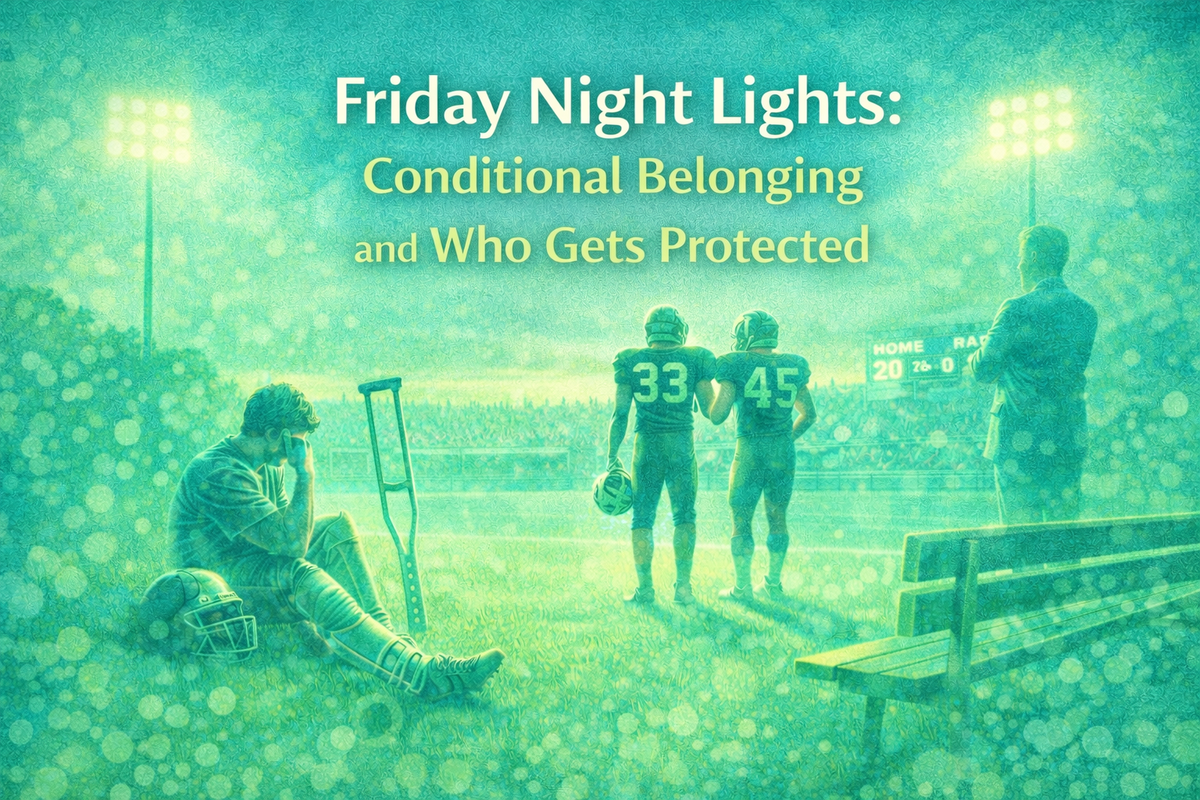
Friday Night Lights is often remembered as a story about football. But at its core, it’s a story about belonging — and how quickly it becomes conditional.
In Dillon, value is tied to performance. You are celebrated when you win. Protected when you produce. Belonging is extended — and revoked — based on usefulness.
This is not unique to a fictional town in Texas.
Belonging with fine print
In many workplaces, inclusion operates with unspoken conditions:
- You belong as long as you can perform at full capacity
- You are supported until accommodations slow things down
- You are valued until your needs disrupt the system
The moment injury, illness, or disability enters the picture, the tone shifts.
Support becomes quieter.
Expectations change.
Protection thins.
Injury as revelation
One of the most telling arcs in Friday Night Lights is what happens after injury. The same community that once rallied begins to distance itself. The story moves on. The system adapts — without the person.
Disability inclusion asks a harder question:
What happens when someone can no longer show up the way they used to?
If belonging depends on peak performance, it isn’t belonging. It’s a transaction.
Inclusive cultures protect people, not outcomes
True inclusion means designing for fluctuation, not perfection.
It means:
- Valuing people beyond productivity metrics
- Supporting transitions, not just triumphs
- Recognizing that contribution changes over time
Friday Night Lights shows us how quickly communities reveal their limits — and challenges us to build workplaces that don’t disappear when someone needs care.