The Pitt: Invisible Labor in High-Pressure Systems
Many workplaces confuse inclusion with endurance. They praise resilience without questioning why so much resilience is required in the first place.

There are environments where intensity isn’t just expected — it’s idolized.
Where urgency is framed as excellence.
Where exhaustion becomes a badge of honor.
Where the highest praise is “they can handle it.”
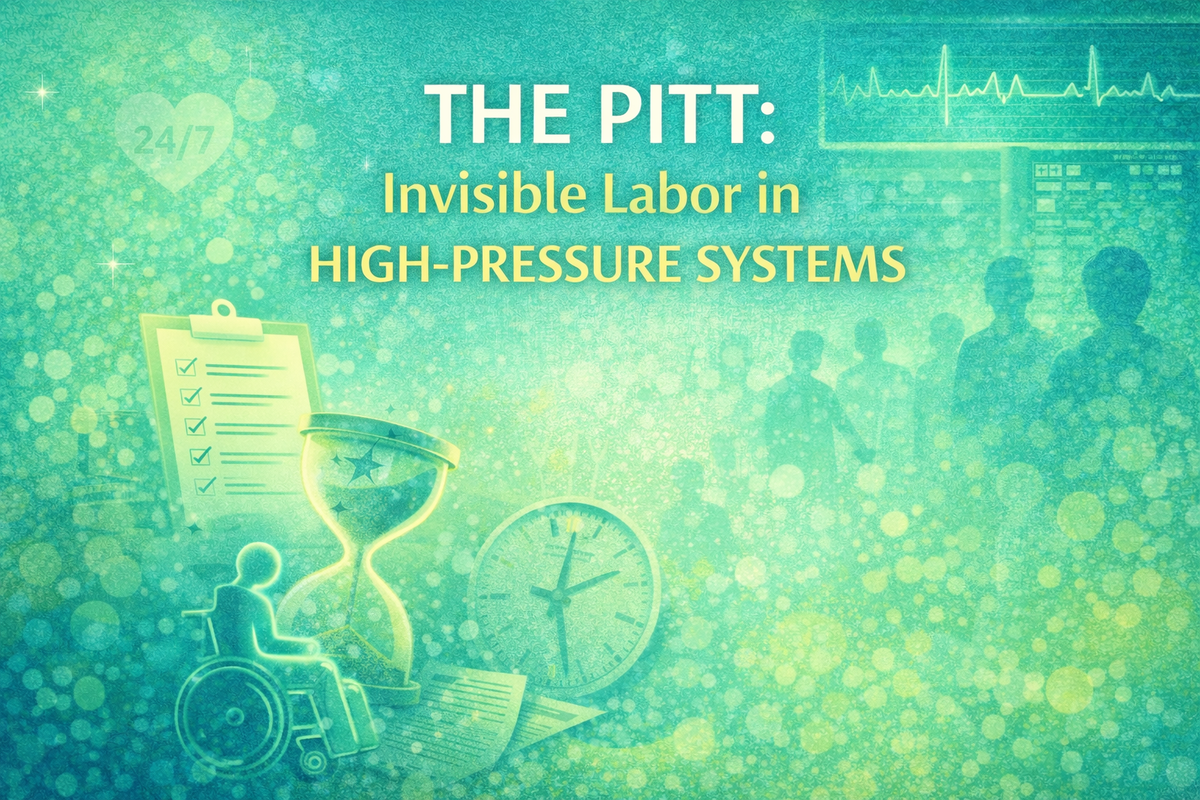
The Pitt captures this dynamic with unsettling accuracy. People move quickly, decisions are made under pressure, and the system rewards those who can absorb chaos without complaint. What it doesn’t reward — or even acknowledge — is the invisible labor required to survive inside it.
The labor no one names
Invisible labor isn’t just extra work. It’s the emotional and cognitive effort spent:
- Anticipating problems before they explode
- Regulating emotions so others can function
- Translating urgency into calm for a team
- Carrying the emotional weight of decisions that affect lives
This labor is rarely written into job descriptions. It’s assumed. Expected. And disproportionately carried by people who already navigate chronic stress, disability, trauma, or burnout.
In high-pressure systems, the question is never “What is this costing you?”
It’s “Can you keep going?”
When resilience becomes a requirement
Many workplaces confuse inclusion with endurance. They praise resilience without questioning why so much resilience is required in the first place.
But disability inclusion collapses when:
- Pushing through pain is normalized
- Rest is treated as weakness
- Support is only offered after crisis
Systems built solely for urgency eventually fail the people inside them — not because those people aren’t capable, but because no one is meant to operate at crisis speed forever.
Designing for humanity, not heroics
Inclusive systems don’t eliminate pressure — but they design around it.
They build in:
- Clear boundaries and expectations
- Psychological safety that allows people to say “I need support”
- Recovery time that isn’t earned through collapse
The Pitt reminds us that invisible labor shouldn’t be the price of participation. When systems rely on it, inclusion becomes impossible — not because people don’t belong, but because the system was never built to hold them.